News
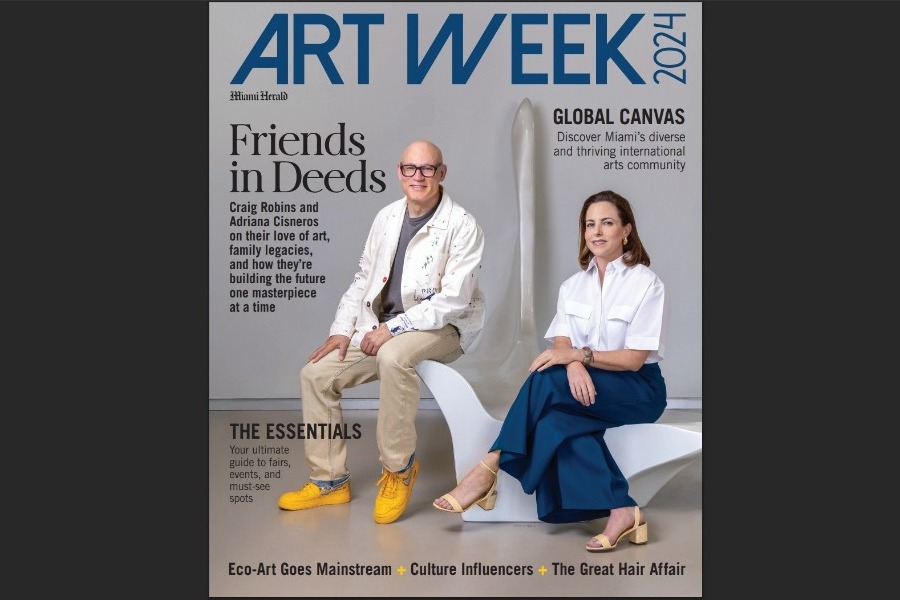


Craig Robins and Adriana Cisneros Talk Art, Culture, and Community-driven Development.
“I think art is a frontier from which humanity advances,” says Craig Robins, reflecting on his passion for blending creativity and urban development. “The art of the moment has to push boundaries; it must be something new, or it isn’t really making any contribution to the art world.” This belief is at the heart of Robins’ work, from transforming the Miami Design District into a world-class cultural destination to revitalizing Miami’s historic Art Deco district.
While Robins is known for his transformative developments in Miami, Cisneros has her own ambitious plans with Tropicalia, an expansive luxury destination in the Dominican Republic that blends community engagement, cultural identity, and environmental stewardship. The first phase of the project will highlight a Four Seasons Hotel and Residences designed by Brazilian architect Isay Weinfeld.
“When I was putting together the vision for Tropicalia, I realized how important it was to create a sense of place through art,” she says.
Together, they share insights into their friendship, their projects, and their dedication to sustainable development, revealing how two visionaries use art and culture to shape not only cities but entire communities.
CRAIG ROBINS: You’ve done amazing work in real estate and art, especially with Tropicalia in the Dominican Republic. How does your passion for art influence the way you approach development?
ADRIANA CISNEROS: I think it’s interesting because I’m new to development but old to art. I’ve always had this deep connection to the art world. When I started working on Tropicalia, it became clear that art would have to play a major role in the project. It was about creating something meaningful, something that wasn’t just a resort but a place that would resonate with the local culture and the land. I realized that integrating art into the space was essential to creating a sense of place. What about you, Craig? You’ve been combining art and real estate for decades — what’s your take?
CRAIG ROBINS: For me, the two go handin-hand. When I create neighborhoods, art, architecture, and design are always at the forefront. I’ve always seen art as essential to building a community. In the Miami Design District, for example, it wasn’t just about developing a shopping destination — it was about integrating public art into the fabric of the neighborhood. Art helps give a place its identity, and it elevates the experience for everyone who lives in and visits the space.
ADRIANA CISNEROS: I love that you brought up identity. When I moved to Miami 12 years ago, I remember feeling this incredible sense of discovery. You and others like Jessica Goldman had already started building these distinct neighborhoods like Wynwood and the Design District, and I could see how art played a key role in shaping those communities. It really inspired me when I was putting together the vision for Tropicalia. I wanted to create a similar sense of place, but in a completely different context — tropical, remote, and deeply connected to the land.
CRAIG ROBINS: That’s the beauty of it. Art has this incredible ability to reflect the unique character of a place. And in Miami, we’re so lucky to have this cultural tapestry that we can weave into our developments. Your work in Tropicalia sounds fascinating, especially when it comes to sustainability.
ADRIANA CISNEROS: That balance is key. We’re working to create a LEED-certified resort, which is a big deal for the Caribbean. I see it as part of our responsibility as developers to be custodians of the land. For example, when we started Tropicalia, we partnered with the Botanical Garden of the Dominican Republic to identify native species that were always meant to thrive there. We’re bringing those back as part of a rewilding project. By the time the Four Seasons opens, the land will look like it did before development, but better — completely rewilded, with the buildings integrated into the landscape.
CRAIG ROBINS: I think sustainability is non-negotiable at this point. It’s not just the future, it’s the present. In the Design District, we were the first project in the world to achieve LEED Gold Neighborhood Development certification. We’ve done things like installing roof gardens to insulate buildings and now, we’re working on growing vegetables up there to serve at local restaurants. These kinds of initiatives aren’t just good for the environment — they add real value to the community.
ADRIANA CISNEROS: Exactly. It’s about pushing the boundaries. For us, even landscaping became part of the sustainability conversation. Native plants use less water, survive storms better, and reduce maintenance costs. It’s amazing how much easier things become when you work with nature rather than against it. It’s good for business, too, which is something people don’t always realize. You’re expanding the west side of the Design District now. Tell me about that.
CRAIG ROBINS: It’s been exciting. We teamed up with Bippy Siegel and some great partners, including Constellation Hotels, which owns iconic properties like Claridge's. We’re bringing in David Chipperfield as the lead architect, which is amazing. It’ll be the first major project in Miami by a Pritzker Prize-winning architect, and it’s going to elevate the neighborhood even more. We’re adding high-end condos, a 100-room boutique hotel, and retail spaces — all designed with the same attention to culture and art integration.
ADRIANA CISNEROS: You make it sound so effortless. But we both know how challenging it can be to manage so many creative minds — artists, architects, designers — all working together.
CRAIG ROBINS: Absolutely. And I think both of our projects show that it’s possible to be both creative and responsible. Speaking of creativity, let’s talk art. Your family has such a deep connection to Latin American art. How does that influence the way you approach your work today?
ADRIANA CISNEROS: Art has always been a huge part of my life. My mother was a pioneering collector of Latin American art, and she was very deliberate in how she exposed me to it growing up. I’d go to museums, but only for 20 minutes to see a few paintings — never the full four-hour marathon other kids were subjected to! It helped me develop a love for art that’s stuck with me throughout my career. When we started working on Tropicalia, I knew I wanted to showcase contemporary and emerging Caribbean artists. The Caribbean has such a rich cultural history, but a lot of it has been overlooked. I wanted to create a collection that explores issues like identity and climate change — topics that are incredibly relevant right now.
CRAIG ROBINS: I completely agree. Art reflects the moment we’re in. One of the most exciting things for me recently was curating a John Baldessari retrospective in Buenos Aires, using works from my collection. It was an incredible experience to bring his work to an audience that hadn’t seen it before. It reminded me how important it is to keep pushing boundaries and exposing people to new ideas.
ADRIANA CISNEROS: I think we’re both lucky to be in positions where we can influence how art and culture are presented to the world. But it’s not just about showcasing — it’s about accessibility. I’ve always admired how accessible the art is in the Design District. People can touch it, interact with it, take photos — there’s no “Do Not Touch” sign in sight!
CRAIG ROBINS: That’s intentional. Art should be for everyone, and I’ve always wanted the Design District to feel like a public space, where anyone can come and experience art in a meaningful way. It’s not about keeping things behind glass — it’s about creating an environment where people can connect with the art and each other. And I think that’s something both of us are passionate about: creating spaces that foster community.
ADRIANA CISNEROS: It’s what gives a place its soul. Whether it’s in the middle of the Dominican Republic or right here in Miami, the combination of art, culture, and sustainability is what makes a space come alive.
CRAIG ROBINS: And I think Miami’s future is brighter than ever because of the work we’re doing now. Art and culture are at the heart of this city, and as long as we keep pushing the boundaries, Miami will continue to thrive as a global hub for both real estate and art.
ADRIANA CISNEROS: Here’s to that!
Read the original article: https://w4-tropicalia-com.s3.amazonaws.com/public/media/documents/mh_artweek_acg_1dec24-130e6e.pdf