News
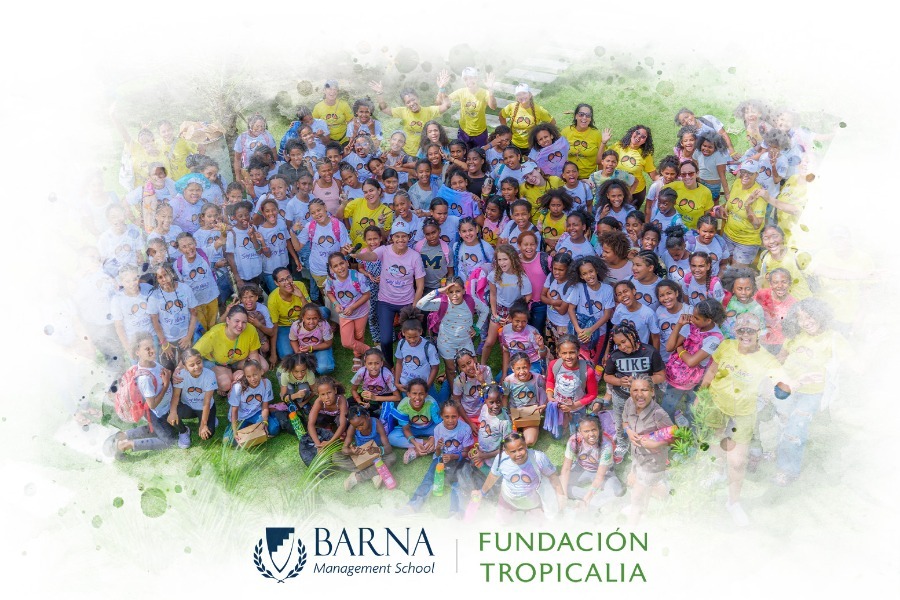


Santo Domingo , January 19, 2026. —BARNA Management School presented the case study I am a girl, I am important, an academic analysis that documents more than fifteen years of work in education, gender equity and sustainability, based on the experience of the Tropicalia Foundation in the municipality of Miches, El Seibo province.
This case study analyzes the model developed by the "I Am a Girl, I Am Important" (SNSI) initiative in Miches, examining how a long-term vision, based on community engagement, gender equity, and purposeful investment, has contributed to transformations in education, youth leadership, and the strengthening of the social fabric. Through this initiative, more than 1,500 girls and adolescents have directly benefited , accumulating over 3,000 participations in the various programs that comprise SNSI, with an impact extending to their families and communities. From an academic and multisectoral perspective, the study addresses the main strategic dilemmas faced by development projects operating in territories with structural and social inequalities, as well as the decisions necessary to balance economic growth, social legitimacy, and cultural sustainability.
The event featured Adriana Cisneros , CEO of Cisneros, who emphasized the value of opening projects to external academic scrutiny: “Allowing a project to be analyzed with academic rigor is an exercise in transparency and learning. Sharing successes and challenges is part of our responsibility if we aspire to build sustainable models that generate real impact in communities.”
Subsequently, a panel discussion entitled “From social intervention to corporate strategy: lessons learned from I am a girl, I am important” was held, which delved into the lessons learned from the process and their relevance to business decision-making, based on the experience of the Tropicalia Foundation.
The panel included Katherine Durán , executive director of Fundación Tropicalia, and Sofía Perazzo , vice president of Sustainability at Tropicalia and president of Fundación Tropicalia, who shared reflections on the importance of coherence, continuity and community integration in development projects.
In this regard, Durán emphasized: “This study reminds us that development is not just about numbers; it's the story of every girl who deserves a different future. We're not looking for quick fixes, but rather to build a path with vision, respect, and support, where growth is only real if it transforms lives and opens doors where none existed before.”
In that same vein, Perazzo stated: “This case allows students and executives to analyze how strategic decisions are made in real and complex contexts, where responsible leadership involves thoroughly understanding the challenge, being creative in the search for solutions, and acting with consistency between purpose and business. In the case of Tropicalia, it demonstrates how a clear vision and well-informed decisions can generate value for the company, while simultaneously strengthening its relationship with the community and the environment in which it operates.”
For his part, Paulo Alves, Rector of BARNA, commented: “This case reflects the type of learning we promote at BARNA: learning connected to reality, which challenges leaders to make complex decisions where strategy, purpose, and social context converge. ‘I am a girl, I am important’ is not just an academic exercise; it is a way to put knowledge at the service of transformation. This project has deeply impacted me, and I hope it will be an example, an inspiration for companies that invest in the Dominican Republic and also for Dominican women who dream of building sustainable businesses. To achieve this, we need a strong social environment, environmental stewardship, and good governance. Only in this way can we develop leaders capable of thinking long-term and acting responsibly in the face of the challenges of sustainable development.”
The presentation included the participation of members of the Board of Directors, academic staff and graduates of BARNA, as well as representatives from the academic and social sector and strategic allies of the foundation, who emphasized the relevance of the case within the current debate on purpose-driven business, regenerative investment and the role of the private sector in social development.
This milestone reaffirms both institutions' commitment to generating applied knowledge and training leaders capable of designing and implementing sustainable models. By sharing real-world lessons learned and decisions made in complex contexts, this case contributes to the national debate on the private sector's role in building long-term solutions that integrate social impact, sustainability, and development for communities.
About BARNA
Founded in 1999, BARNA Management School is the first higher education institution specializing in management in the Dominican Republic. With over 25 years of experience, it combines academic excellence, an international faculty, and a focus on developing managerial skills.
Its educational model promotes a comprehensive vision of leadership, which not only enhances technical and strategic capabilities, but also ethical thinking, social commitment, and positive impact on people and communities.
The institution offers executive programs, master's degrees and bachelor's degrees, contributing to business strengthening and the sustainable development of the region.
About the Tropicalia Foundation
Fundación Tropicalia is a non-profit organization that manages initiatives and strategic alliances to support the community of Miches in its development process and strengthen its socioeconomic inclusion in this tourist destination. Established by Tropicalia in the Dominican Republic in 2008, Fundación Tropicalia develops programs focused on education, gender equality, economic participation, cultural identity, and environmental awareness.