News
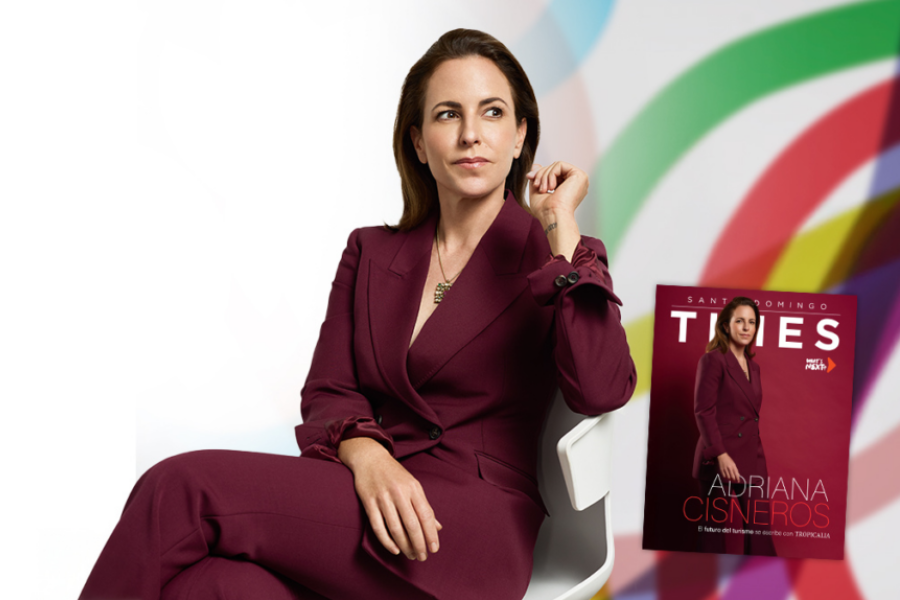


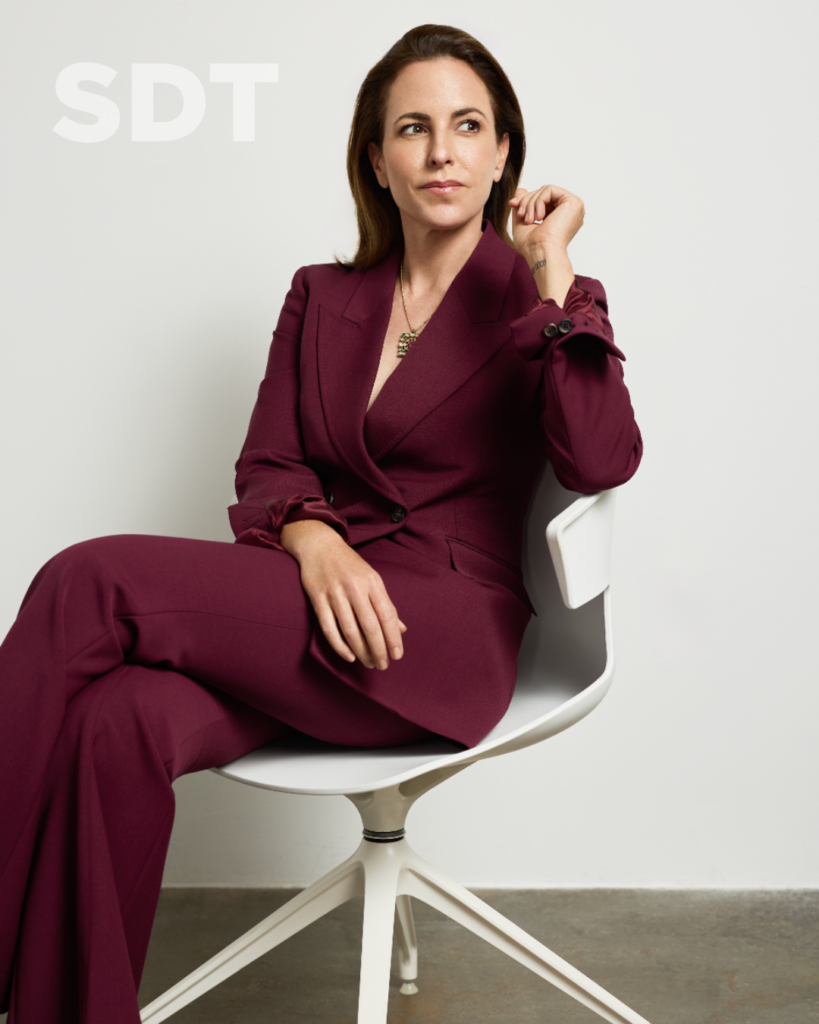
In a still-virgin corner of the Caribbean, where biodiversity endures and the community dreams of development that doesn't exclude its identity, one woman leads with intergenerational vision, purpose, and strategy. Adriana Cisneros, CEO of Cisneros, has made Tropicalia much more than a tourist destination: she has transformed it into an embodied vision of conscious luxury, a living experiment in what it means to invest in a country with empathy, excellence, and a long-term perspective.
Her perspective is shaped by two powerful legacies: the entrepreneurial and transformative vision of her father, Gustavo Cisneros, and the educational and cultural sensibility of her mother, Patricia Phelps de Cisneros. From both, she has inherited a style of leadership that combines action with emotional attunement, scale with impact, and direction with humanity.
With one foot in the global corporate world and the other on the fertile land of Miches, Adriana narrates, clearly and without embellishment, how building the future requires unlearning, listening, and reimagining what we understand by development. Through alliances with partners like Four Seasons, BID Invest, and The Nature Conservancy, and with a deep sensitivity toward the surrounding community, she directs an initiative that redefines the rules of tourism in the Caribbean.
But here, we aren't just talking about tourism; it’s about a new pact with the Caribbean. One that cares as much as it transforms. That measures its success in opportunities generated rather than meters constructed. That finds beauty in adaptive architecture (like that of her partner, the Brazilian Isay Weinfeld, a master in designing spaces that dialogue with nature) and that recognizes true impact in initiatives like "Soy niña, soy importante" (I am a girl, I am important), a program that empowers girls in Miches through education, mentorship, and dignity. Ultimately, this interview reveals a leader who is absolutely not afraid to change the rules of the game and a project that is not content with attracting visitors, but rather invites them to be part of something much bigger.
It was my father who, when I was just 25, suggested the possibility of taking on the group's leadership. It wasn't a sudden decision; it was the result of a two-year-long, deep conversation. I decided to explore the possibility thoroughly and returned to university for a master's degree. That academic experience ultimately confirmed that leading was, indeed, a path I was passionate about and willing to pursue.
What part of Tropicalia do you feel carries the imprint of your father, Gustavo Cisneros's, worldview?
Tropicalia is, in many ways, his legacy come true. From the beginning, his vision transcended the idea of building a hotel: he dreamed of a project capable of transforming, generating well-being, and deeply caring for our surroundings. My task has been to materialize that dream by driving social, environmental, and community initiatives, with sustainability and excellence as pillars. Tropicalia reflects his worldview: a development with a soul, where social and environmental impact is as valuable as the visitor's experience. Through the Tropicalia Foundation, we promote literacy programs, create access to financing for local entrepreneurs, and forge key partnerships, such as the one we maintain with Promiches. Every step has been guided by the responsibility to honor his vision.
“Playa Esmeralda is one of the first places that connected us emotionally with Miches. The feeling of peace you experience there stays with you long after you've visited.”
Growing up surrounded by art forever changes the way you see the world. Your mother has been one of the great collectors and promoters of Latin American art and education. What did you inherit from her, and how do you apply it in your daily life?
From a young age, I understood that art is not just a form of expression but a transformative tool. I grew up seeing how art can generate questions, fuel curiosity, build communities, and sustain broader conversations about who we are. Through my mother’s work—one of the great promoters of Latin American art—and our family's commitment to culture and education, I learned to value the importance of creating and caring for cultural infrastructures as a way to preserve memory, stimulate thought, and ultimately, build the future. I also learned the commitment to building infrastructures that support collective memory and thought. That is how the Tropicalia Collection was born: an evolving cultural platform that celebrates Caribbean art, design, and craftsmanship, fostering a dialogue between tradition and contemporaneity. Located in Samaná Bay, it broadens the guest experience and offers artists a space to create and enrich the country’s cultural fabric with a vision of responsible and sustainable luxury.
"In collaboration with Tom Doak, the renowned golf course designer who integrates the latest in design, technology, and sustainability, we are creating what will be the most ecological golf course in the Caribbean."

Tropicalia represents the family legacy I have inherited, which now defines our corporate and social vision. It is, in essence, the union of two legacies: the Cisneros corporation, which, with over a hundred years of history, has always been marked by investing in businesses that transform societies—a path my grandfather began and my father continued, elevating our brand to a multinational, multidisciplinary business deeply focused on its people; and the Cisneros Foundation, along with the Patricia Phelps de Cisneros Collection, which my mother initiated in parallel, and which are now institutions that have revolutionized access to quality educational content for thousands of teachers in Latin America while giving voice and representation to contemporary Latin American art globally.
Tropicalia is a project of transcendence and legacy, a commitment to timelessness, centered on the human experience: from the local community to the guest and the investor. It advocates for social inclusion within its own value and employment chain, prioritizing local hires within a 50 km radius of our site. We have set a benchmark in the construction phase by eliminating harmful practices, such as the use of foam in the on-site food supply chain, while prioritizing the conservation of biodiversity in the project's design and management, always applying the mitigation hierarchy. In its social aspects, Tropicalia is multidimensional. Since 2008, through the Tropicalia Foundation, we work closely with the Miches community as a true development NGO, designing programs with, by, and for the people we serve. This has allowed us to implement transformative initiatives like Soy niña, soy importante and our university scholarship program, among many others. Tropicalia represents much more than a destination: it is a model of how to do business with impact. That is our vision and our reality.
"Leading is, indeed, a path I am passionate about and was willing to pursue.”
How does the idea of prioritizing quality over quantity of tourists translate in Tropicalia?
In a conscious and profound decision: fewer rooms, more space, more privacy, more care. From the beginning, we knew that tourism needed to be rethought with respect for the environment and social commitment. We bet on a serene, transformative luxury that honors nature and creates community. Every detail is designed to leave a positive footprint and build a long-term legacy. Today, brands like Aman, Rosewood, St. Regis, and Four Seasons confirm that the Dominican Republic is ready for a new chapter: a more sensible, authentic tourism faithful to its essence.
“Tropicalia is, in many ways, my father's legacy come true.”
What does Miches have that no other place in the world has, and what has it meant for you to be part of its evolution as a destination?
Miches is, quite simply, an ecological and human treasure waiting to be rediscovered. Located between the Cordillera Oriental and Samaná Bay, it harbors unique biodiversity: cloud forests, mangroves, waterfalls like La Jalda (the tallest in the Caribbean), rivers, lagoons, and miles of virgin beaches. Its green and humid microclimate, along with marine and terrestrial ecosystems, make the area an exceptional natural sanctuary, flanked by protected areas like the RVS Laguna Redonda and Limón. Playa Esmeralda, with its serene beauty, was one of the first places that connected us emotionally with the territory. But if you ask me for something unique that defines Miches: it is its people. A hardworking, warm community with a strong cultural identity and a great capacity to grow without losing its essence.
Since our arrival, we understood that Miches was not only a natural paradise but a community with potential and a desire to grow well. We took on the responsibility of promoting conscious, organized, and sustainable development that preserves its natural wealth and benefits its people. To achieve this, we promoted alliances among developers and founded PROMICHES in 2020. Today, with 11 members and chaired by Tropicalia since 2024, this collaboration has been key to building a growth model tailored to Miches, with a long-term vision and shared commitment.

What conditions differentiate the Dominican Republic as a destination for sustainable, luxury tourism compared to other Caribbean markets?
The Dominican Republic offers a unique combination in the region: diverse geography and a centuries-old history that generate differentiating experiences. Its consolidated tourism infrastructure, high air connectivity, political stability, and economic growth make it one of the most accessible and safest countries for investors and tourists. The warmth of its people and its culture of service are a sine qua non distinction. The country has the market maturity to diversify its offering toward luxury. Added to all these attributes is the willingness shown by the State to support the strengthening and sustainable development of the tourism sector. Both President Luis Abinader and the Minister of Tourism, David Collado, are great allies who possess exceptional sensitivity and readiness to act.
What criteria guided the choice of Isay Weinfeld and Four Seasons as key allies, and how does this proposal differ from other luxury offerings in the country?
The choice of our partners was one of the most strategic decisions of the project. We wanted brands and individuals who shared our vision of luxury with purpose and had the sensitivity to dialogue with and enhance the environment. Isay Weinfeld captivated us with his sober architecture deeply connected to nature. With Four Seasons, more than attracting prestige, we sought a partner committed to sustainability and social impact. Reserving this enclave for them has been our way of further elevating the standard, positioning Tropicalia—and the Dominican Republic—among the highest standards of global competition and among the world's most admired ultra-luxury destinations. The fact that a traveler chooses Miches over Hawaii or Baja California confirms this. The branded residences allow owners to live with the same standard of service as in their hotels. 50% of the residential units have already been sold. The Four Seasons Resort and Residences represent not only a milestone for national hospitality but also a global model of conscious luxury.
“If you ask me for something unique that defines Miches, it is its people. A warm, hardworking community, with a living cultural identity and an enormous capacity to grow without losing its essence.”
At the recent event in Tropicalia, the experience was a synergy between landscape, gastronomy, and local sensibility alongside emerging talent like Chef Olivier Bur. How important is the inclusion of local talent, from artisans to engineers, in building a tourist destination that aspires to be sustainable and iconic?
Including local talent in Tropicalia is essential for building an authentic and sustainable destination. By collaborating with chefs, artisans, and engineers from the region, we shape an identity deeply connected to the community. Chef Olivier Bur is one example; his relationship with Tropicalia began by supporting the Soy niña, soy importante program and evolved into a culinary collaboration that celebrates Dominican heritage with sensibility and innovation. His proposal at Casarré reflects this vision. Collaborating with professionals who understand and celebrate the value of the local allows us to create experiences that go beyond luxury and highlight the identity of Miches. This is how we ensure our visitors don't feel like they are in a generic place but rather part of a special community.

Every time I speak about Tropicalia, whether with the Miches community or with investors, I feel the same thing: a genuine passion for the project and a deep commitment to its purpose. What drives me is sharing a vision I fully believe in, and that is precisely what distinguishes us as a team: the authenticity with which we express ourselves, the warmth with which we relate, and the conviction with which we defend what we do, in a context where every stakeholder is an essential part of this project we are building together.

You have walked hand-in-hand with the Miches community for years, sowing trust, opportunities, and shared dreams. How has that relationship evolved over time? What place does Soy niña, soy importante occupy in your heart, and why has this deep commitment to girls become an irrevocable cause for you?
From the start, we knew Tropicalia had to be built alongside the community. That's why, in 2008, we created the Tropicalia Foundation with a collaborative focus between residents, government, and the private sector. That active listening allowed us to identify real needs and design over 30 programs, five of which are now national benchmarks. We understood that education was the foundation of progress and that girls and women faced deep vulnerabilities. This is how Soy niña, soy importante, the project that has touched my heart the most, was born. We seek to transform the reality of thousands of girls, teaching them their rights, helping them discover their potential, and offering them tools to complete their education and build a future with real options. Over 3,000 girls have been impacted, and seeing how many of them return as volunteers or as university students ready to contribute to their community is one of the greatest rewards. Childhood, especially in contexts of scarcity, requires active protection, and that is why we made the commitment to intervene at the root: prevent school dropout, early marriages and pregnancies, and form leaders who know how to speak out against abuse. This work was even recognized by the BBC in their documentary In Pursuit of Wellness. And now, the next step is to integrate boys, fostering new models of respect and equity, so that this legacy of hope and transformation truly endures. Because in Miches, every step forward is also a shared story.
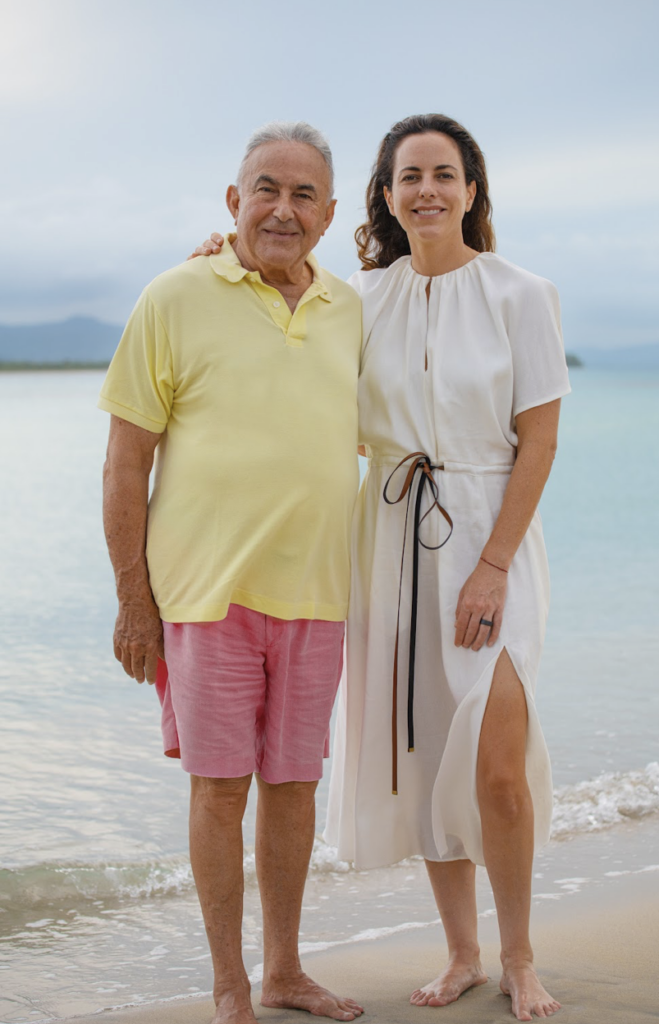
“My inner child always reminds me that everything is solved with a dip in the sea.”
How has the collaboration between Promiches, the community, and the State materialized, and what achievements are you most proud of in this collective process?
In Miches, the union between community, private sector, and State has ceased to be an ideal and become a tangible reality. Through PROMICHES, we have consolidated a public-private alliance that comprehensively addresses environmental and social challenges: from protecting watersheds and species like sea turtles to waste management and territorial planning. We are proud to have driven initiatives like ProTortuga, which protects 50 km of coastline, as well as the installation of turtle-friendly lighting. We have also reorganized public access to Playa Esmeralda (ceding over $250,000\text{ m}^2$ of land without compensation, along with other members) and donated the design for new community infrastructure. The signing of an agreement with the Dominican government in 2021 sealed the commitment to responsible tourism development. And alongside them, we have contributed to key works such as the Uvero Alto–Miches road and the hotel aqueduct, thus consolidating a growth model that protects the future of Miches and balances conservation, community, and infrastructure.
Tourism is undergoing a profound transformation. From your perspective, what trends will mark the future of this industry in the Dominican Republic, and how can the country prepare to lead this new era?
Luxury tourism is being redefined globally, and the Dominican Republic has the opportunity to be a reference in that evolution. The trends that will mark the future revolve around three major axes: authenticity, sustainability, and holistic well-being. Today's traveler seeks meaningful experiences, connected to local culture and respectful of the environment. Sustainability will cease to be an added value and become a standard, while well-being is redefined as balance and purpose. With its cultural warmth and natural wealth, the country has the potential to lead this new era of conscious tourism. The Caribbean can be that refuge if planned with sensitivity and a vision for the future. From my perspective, the future of tourism in the Dominican Republic is shaping up as an evolution toward more conscious, authentic, and sustainable ways of traveling. Luxury is no longer measured in square meters but in the real connection to the place: walking through virgin landscapes, listening to local stories, savoring local flavors. That search for meaning is a great opportunity for the country, which has diverse geography, a vibrant culture, and genuine hospitality. Well-being is redefined as a space of balance between the ancestral and the contemporary. With political stability, robust airport infrastructure, and human talent with a vocation for service, the country is ready to embrace this evolution. Traveling, today, also means caring, and the Dominican Republic has much to offer the world from that new place.


The concept of luxury is changing: today, there is less talk of opulence and more of time, privacy, authenticity, and purpose. From your vision, what does luxury with purpose mean in the context of the Caribbean, how does Tropicalia embody it in the Dominican Republic, and what values do you believe truly connect with the sophisticated and conscious traveler today?
For me, luxury tourism is not measured by price or aesthetics but by the intention and depth of the experience. It is the privilege of time and perspective, used with consciousness. True luxury resists inertia: it doesn't seek to passively entertain but invites one to pay attention, to study a place before arriving, to learn its language, to understand its history through art, music, and daily rituals. In Tropicalia, we seek to integrate into the landscape, not impose ourselves. We use local materials, natural ventilation, and passive design to create a real immersion in the environment. Because in the end, authentic luxury is not about what you consume but about the quality of the presence you deliver. What truly motivated us from the beginning was the purpose: a project with high social impact and low environmental impact. Luxury became the ideal vehicle, where less is more. Today, true luxury is silence, peace, disconnection. It's also knowing that your investment has a positive impact. From our low-density design, which preserves 67% of the land; our goal of achieving LEED certification; to our strategic alliances with stakeholders like BID Invest, every decision reflects that vision of purposeful, regenerative, long-term luxury.
As a woman leading a multi-generational conglomerate, what personal lessons have allowed you to lead with audacity and sensitivity simultaneously?
Leading a multi-generational group has been a school of time and consciousness. It has taught me that a long-term vision only makes sense with empathy. True success is measured by the impact we leave on our community and the environment. My leadership style is based on constantly questioning the legacy we build, listening, innovating, and moving forward with others, fairly and humanely. From this is born a form of leadership that dares to innovate, to break molds, to bet on ideas that transform. But it also knows how to listen, connect, and adapt. It's not just about moving forward but about moving forward together.
"My big dream is to cycle across La Hispaniola."
You are part of a generation that has redefined the business role with a more ethical and conscious outlook. How do you envision the legacy you want to leave in the Caribbean and Latin America regarding regional tourism?
We want to be remembered for having the courage to do things differently: believing that luxury can be responsible, that development should benefit everyone, and that tourism can be a force for real transformation. In Tropicalia, every decision stems from that conviction. We bet on a model that puts people and the environment at the center, that grows with purpose and leaves a lasting footprint. From the Tropicalia Foundation to initiatives like ProTortuga and alliances with The Nature Conservancy, we are sowing a legacy where enjoying also means caring, and where every experience becomes part of something even bigger.

"The next step in our vision is to continue creating iconic experiences that leave a positive footprint on the region. In Gran Tropicalia, we will continue to elevate our proposal with transformative projects. In collaboration with Tom Doak, the renowned golf course designer who integrates the latest in design, technology, and sustainability, we are creating what will be the most ecological golf course in the Caribbean. This project reinforces our philosophy of preaching 'with deeds, not words,' demonstrating that it is possible to fuse tourism and conservation authentically and effectively. Through innovation at Tropicalia, our goal is to inspire others to elevate their own standards so that the Dominican Republic is not only a dream destination but also a global model of sustainability and unique experiences."
A book you always return to underline? Unreasonable Hospitality by Will Guidara (Spanish version: Hospitalidad Irracional)
The corner of Miches that excites you every time you visit? Playa Esmeralda
What relaxes you when the world moves too fast? Bathing in the sea
A Dominican food you learned to love over time? Mabí (a fermented drink)
Something you always keep in your suitcase, even if you rarely use it? Resistance bands
A phrase from your father or mother that makes more sense today than ever? "It costs what it's worth..." or "Festina Lente" ("Hurry slowly").
A hidden talent you've started to cultivate? Learning to play golf
A dream yet to fulfill? Cycling across La Hispaniola
What does the child Adriana frequently remind the adult? That everything is solved with a dip in the sea
A work of art: Devosyon Makaya, c. 2021-2024, by artist Myrland Constant (Haiti)
An artist: Natalia Ortega
The beach is: Medicinal
The Caracas you carry in your heart: That's right, my home
What the Dominican Republic represents for you: My favorite place
How do you imagine your life and that of Tropicalia, 20 years from now? Happy, peaceful, and in nature
IG: @adrianacisnerosceo
Read the Original Article - Adriana Cisneros - Liderando el futuro del turismo en RD con Tropicalia